The following interview with filmmaker Ghassan Salhab took place after the premiere of his film Contretemps at Metropolis Cinema in Beirut, on January 12th, 2025. The conversation was conducted in French and English via correspondence between March and May, 2025.
Ghassan Salhab, Contretemps, 5h 45min, 2024.
WS: Before the premiere screening of Contretemps, the cinephile and artistic milieus in Beirut were buzzing with bantering comments about the announced length of the film. For although neither rare nor unique in the history of world cinema, a 5 hours and 45 minutes film by a Lebanese filmmaker is an exception to the norms. Moreover, the expected effort required of its spectators was substantial given the series of crises, wars and genocides that had only recently abated and left everyone physically exhausted and emotionally strained. This foundational formal choice is remarkable as it seems to move against the grain of a generalized need for self-healing and therapeutic activities. Is your decision solely explained by the structural requirement of the film’s content or were there other necessary considerations? Further, is “extended time’”a formal but also a conceptual component of this latest film of yours?
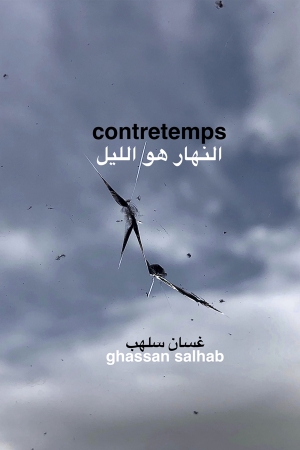
GS: To start our conversation, I must first point out that this film was completed at the beginning of the previous year. The horror, the genocide in Gaza was barely three months old, and of course, no one had any idea that it would last so long, would be endless, and that we would suffer yet another Zionist aggression in Lebanon. Another point of clarification: none of the videos that make up Contretemps were intended as a film, either about the uprising in 2019, 2020, the time of Covid, or the terrible explosion at the Beirut harbor. I filmed with my phone, often posting on my Instagram account, treating the posts as a kind of visual notebook. Probably to feel less subjected to this technological addiction and to delude myself with a certain notion of sharing.
It was in June 2023, while trying to clear my laptop's memory (I was in Dakar at the time, preparing a film essay), that I saw the videos of the 2019 uprising for the first time after everything. This time, I actually saw them. At the time, I was filming and “sharing”. Not everything, of course. Geographical distance, hindsight, perhaps allowed me to see. It was there, in my native land, that I decided to embark on this project, this time curve, this chronology. I thought I had the hindsight to do it. It wasn't until I started editing, until I entered this tunnel, that I realized it was not a matter of hindsight. Editing isn't about hindsight anyway, even with this film. I wasn't reliving the different situations, the different moments, nor was I confronting or analyzing them. I was discovering what I had filmed, moving forward week by week. And, as it turns out, my memory isn't as sharp as it used to be, so I moved from one video to the next without really knowing what was in store for me.
I have this obsession with the present, that is to say, with the instant, especially in cinema: the instant of what is filmed and the instant of what is experienced. But also the instant of what I see, hear, as a spectator, and the instant of what is projected or broadcast on a screen. Still, this “instant” is all the more improbable for all of what is neither recorded nor filmed, for all of what remains off-camera, all that collective memory, from the most significant to the most insignificant. With Contretemps, I found myself doing both and being both at the same time: the filming body, a kind of witness, and the involved, militant body.
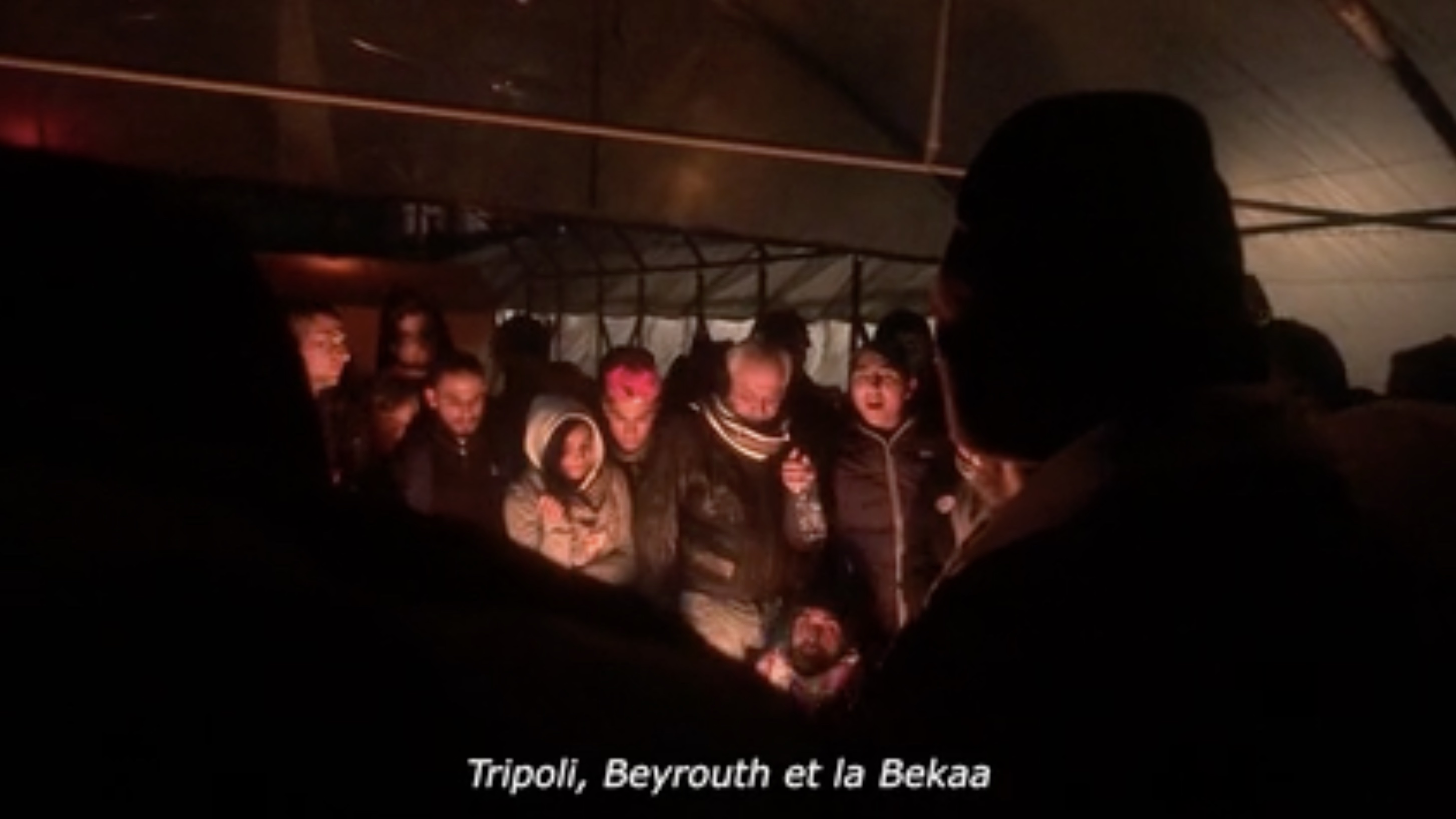
I'm well aware that showing this film in Beirut, with all that we've been through and are still going through, is a completely different matter from showing it in France or Korea, the two other countries where it's been shown so far. I'm aware of the weight here, of the exhaustion. But then, Contretemps took on this form, this duration, this experience, and that's how it came about: a filmed logbook that also calls on the written word. I wasn't interested in giving a filmic form to the short videos I collected, nor a sort of film about them. I did not want to mold them in a given filmic genre. Rather, it had to be a dive, an immersion, body and soul.
At one point, I felt that I owed it to myself to make this film about myself, about ourselves, for what this “we” still means. The diverse and multiple “we” of those times is an affair both personal and collective. For me, this “and” is fundamental. So many people have filmed the time of the uprising in Lebanon, the time of Covid, August 4 and the aftermath, their daily lives or otherwise, in one way or another. So, let's imagine for a moment several films, however long they are, each individual offering us his or her own viewpoint, whatever it may be. But this is not about healing or some kind of therapy, through art no less. In any case, we're a long way from the end of this tunnel.
WS: I thank you for this generous reply. What struck me most is when you write that you were not making a film out of, or about, these short videos, rather the film had to be a dive into, a full immersion, « body and soul ». Possibly, this says a lot about why and how the film evolved into a lengthy experience. Nevertheless, this dive into these videos, this attempted re-immersion in the events of the uprising, the pandemic, the harbor detonation and the onslaught of the genocide in Gaza, does accept or perhaps adopt, the principle of chronology as a guiding structure. There is much to say and observe about how the film grapples, upholds and sometimes fails this guiding structure but first can you speak about your choice of constructing your film around a linear chronology and perhaps elaborate further on what are its limitations?
GS: When I speak of a dive, an immersion, “body and soul”, I'm obviously referring first and foremost to my own immersion. The one I had to make to compose this film. And as I said, it's not a question of reliving, rewinding, recapitulating, or anything else of the introspective kind, including the most directly personal “part” of the film, including everything that didn't make the cut, but of plunging into this filmed, recorded material, these traces, my only videos, at the risk of getting bogged down. After all, Contretemps is the title of this film. Day is night, in Arabic. The title, whether in French or Arabic, is already a kind of paradox with my decision to proceed chronologically. When you look at the antonyms of the word contretemps, you have, among others: flattening, arrangement, facility, opportunity, success... In short, “The order of things”.
Anyone who cares to dwell a little knows that what we call time is not linearity, but modulations, jumps, hollows, and absences. My approach is not to say or demonstrate this, which would be ridiculous on my part, as I hate kicking doors that are wide open, nor is it to appeal to memory, which amounts to much the same thing when it comes to modulations, jumps, hollows, and absences. This chronology, my visual logbook, enabled me to move forward in a time whose “outcome” is known to all: the uprising was suddenly snuffed by Covid, emptying the streets, the city, the explosion of the port, and the beginning of the genocide in Gaza. There was no question of dismantling, of undoing what has been undone. The implacable is known to all, beyond any analysis.
Day is night, or when the equal distance between these two worlds is no longer, one absorbing, swallowing the other. So yes, against, as if (attempting) to counter the order, its major crisis—our given temporality/condition as mortals, and which has suddenly been derailed, trying to propose another time, starting with that time lived for a few months in the streets, with all the intoxication of the beginning (I say this with love, not at all with cynicism), this path which was therefore upset and thwarted. This temporality is both singular and plural, my singular and my/our plural in this case. This film is a contretemps; against setbacks. The time of Covid—we'd almost forget what it was like to regain control of power—was a perfect virus to counter the social body that seemed to be spinning out of control; this time really dislocated this double identity, singular and collective, common, that was trying to emerge.
If the structure had been different, it would have been, I think, a voluntarist exercise on my part. As if it were a question of demonstrating or dismantling, I'm repeating myself, but it's not. Any experience, cinematographic moreover, proposed to oneself, to each viewer, inevitably comes up against the limits of one's own approach. How do you not (self) collide?
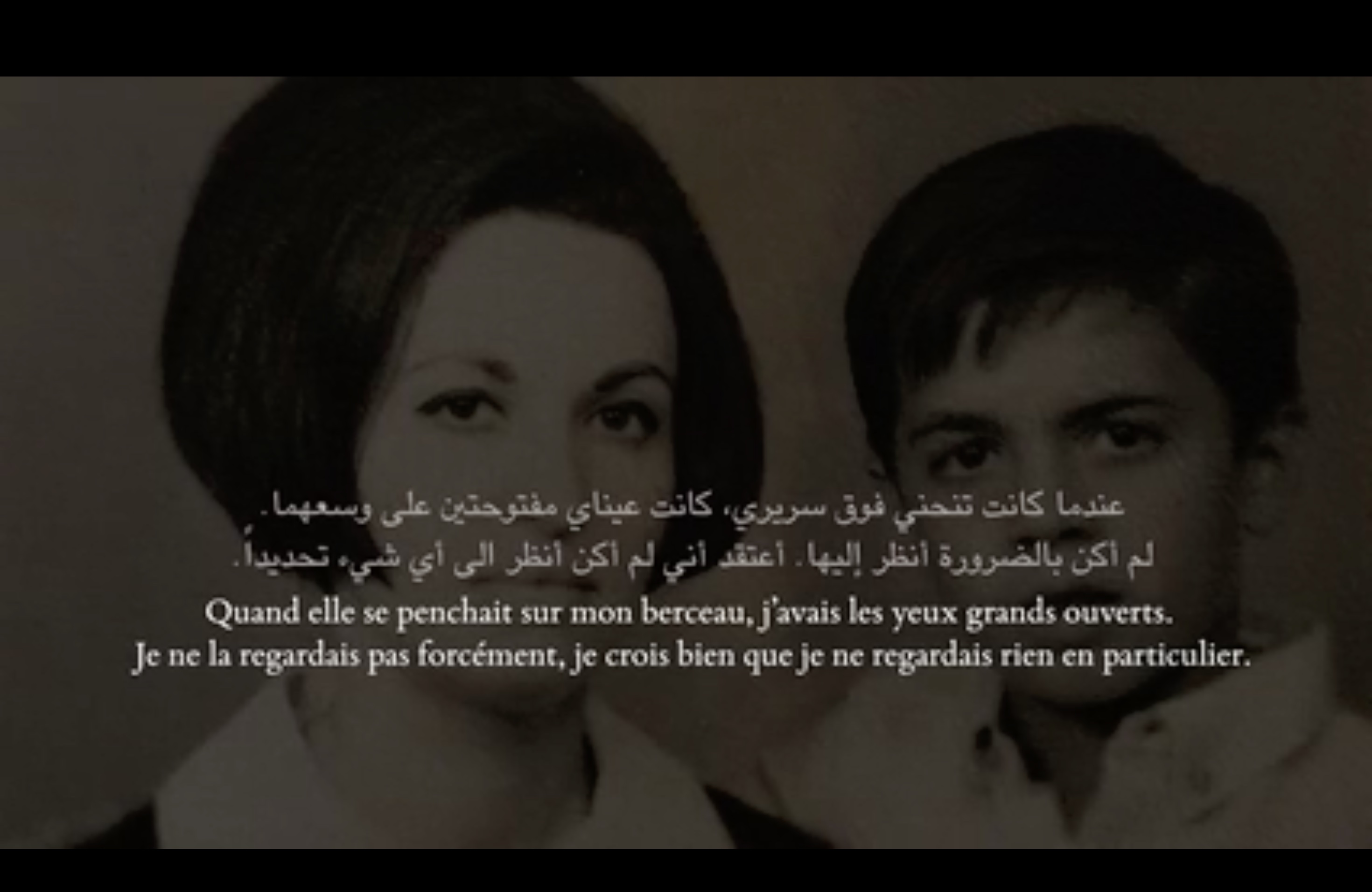
WS: I gather from your answer that the skeletal chronological structure of the film is compromised by two obvious observations: first, everyone knows how this chronology developed, and everyone knows its conclusions. Two, and perhaps more importantly, this chronology was not fully ours, rather we were under the reign of what can be termed public time. If you recall, following the assassination of Prime Minister Rafic Hariri, Bilal Khbeiz, and others published short texts in which they grappled with the time of a city that was not quite its own. They wrote: “… the inhabitants realized, with the bitter belatedness of the deceived, that entering such a time was more oppressive than the event itself […] An exorbitant time beyond anyone’s capacity to shoulder. An excessive time because unforeseeable […] For when the unforeseeable occurs, time can no longer be claimed as one’s own.”1 I summon this quote from a text written more than twenty years ago to note that after watching more than three hours of a chronology, albeit intermittent and imperfect, your film suddenly interrupts with the image of an aging father and the voice of a narrator asking about the whereabouts of the mother. It is a crucial moment in the film where the need for a dialogue between specific individuals—an address and an addressee—erupts to question the time of the uprising as exorbitant and possibly oppressive. Could you elaborate on the sudden intrusion of the personal and the specific in your film?
GS: I don't find that the time of the uprising was exorbitant or oppressive. Whatever its beginnings, whatever the various attempts and inevitable recuperations, it opened up a field of possibility. A time when streets, and more than one square, became partly public—I say became, because, as we know, nothing is public anymore, not even the parks and gardens that bear the name “public” in other countries. Everything is more than ever under control, under surveillance, with only nooks and crannies, vacant lots, abandoned, are beyond the reach of any camera—even if public order, precisely, circumscribed us in these few streets and spaces we occupied, hemming us in. Not exorbitant, because it is inevitable in any attempt to shift (if only a little) the lines of a society's order, that the social and economic crisis itself was already opening up new fields, new wounds. There's so much to say about a city like Beirut, which has not stopped changing since the 1960s. Capitalism in all its forms, including crises, of course, and wars, is constantly redefining the city, continuing to... The uprising was unfortunately only a jolt, albeit an intense one, a “jolt” in the merciless chain of events— that famous word—that has been going on for so long around here. Speaking of the uprising and the demonstrations, I'm reminded of the (perhaps rather facile) image of human beings rediscovering some of what they used to be for centuries and centuries: nomads. During days and nights, we ceased to be sedentary; we ceased to be seated. With every upheaval, wherever it may be in this world, a bit of this nomad resurfaces.
The sudden intrusion of the personal, as you say, is more simply due to the fact that, because of the Covid pandemic, which forced us out of the streets almost suddenly, I finally went to visit my sick parents, whom I didn't dare get too close to, fearing I might infect them. Our life together, those days and nights spent in different streets and squares, suddenly came to a halt, and this halt was not just a parenthesis. It was also not a return to normality. Loss was beginning to show, and would soon take over, on a collective as well as an individual, intimate scale. The “passage of time” had once again caught us inadvertently.
As I was editing without raising my head from the chronology of accumulated videos, arriving at the end of May 2020, I suddenly remembered that my mother passed away on the first official day of summer. It took me several days to resume editing, turning to a text I had written entitled contre-jour. I was addressing my mother. No video of her during her long illness, let alone the last few months, nor of my father, who was undergoing a rapid and incurable decline. Tempted as I was, giving in was out of the question. So, I decided that much of this text would take place on screen. And once the text had entered the film, it would never really leave it, one way or another. However, I never thought for a moment of invoking or summoning my various texts written since the beginning of the uprising, and which I published both in French (on the lundimatin website) and translated into Arabic (in Megaphone), except at the very end of the film, in November 2023, at the start of the genocide in Gaza. Surely these writings and the film are in some way complementary, and perhaps I've “unconsciously” integrated this complementarity. In any case, I had made the choice that Contretemps would not be analytical, with its supposed hindsight.
WS: I sense in your response a reluctance to answer the question regarding the intrusion of the personal. Your answer tends to diffuse its importance by resorting to practical explanations. Still, I wish to ask again about the necessity of the personal to interrupt the flow of public images. To be more precise, your film, after the third hour, after the death of the parent figures, begins to layer poignant visual and literary statements. For example, you write « last chant (4h 23min) », then comes the sentence « yes, the catastrophe takes care of everything ». At 4’38’’ you write that no one should die around you for there is no more room left. At 4’52’’ you longingly write « How beautiful are beginnings » and then at 4’59’’ comes a very poignant observation on how your father’s friends now see you and speak of you as his son and you ask, « Why now? ». Certainly, these choices cannot be simply explained. The personal in your film returns powerfully to take over the filmic space. This must say something about the time of the uprising.
GS: I have to admit that the question at the end, or rather the observation you make, surprises me. Isn't it almost self-evident? The months of the uprising were very intense, and it really was night and day. No matter how lucid I was about the “outcome”, the sudden cessation of this rhythm of life was more than baffling; it was violent. I had kept up the practice of filming with my “phone/camera”, but here's the thing: the gesture of filming at the heart of a demonstration is quite different from filming from a window, filming a mountain, the horizon, trees, an empty street, recording the passing of seasons... even if most of my shots are more or less equally long, it's not the same duration, the same time lived, experienced. My gaze is necessarily different; it's no longer in the momentum, now lost; it's in the gaze itself, if I may say so. But allow me not to define it more precisely....
The sudden cessation of these days and nights in the company of others, a “we”, whether we like it or not, has left me suspended, not alone again with myself, but alone without this “we” which, impossible not to know it, was most fragile, in suspension. The time of an uprising is a formidable, extremely rare, time of a possible other field (of life). It's a terrible collective loss, whatever the scale of that collective. As a result, we find ourselves in impossible mourning in a country that doesn't really have the luxury of mourning time, so many forms of loss keep piling up. And it's this melancholy which is, let's say, my own—I wouldn't dare say it's a “we”—which has taken its place, all the place, as you say. It invaded me.
The words that took their place on the screen were also part of this gesture, whether they were the words of others - Blanchot's “le désastre prend soin de tout”, for example—or my own. I was back in the fragment. I was once again in a mode of questioning, I was transfixed. Not that I was assertive at the time of the uprising. Let's just say that there's something special about the élan or momentum: the doing, the action that wins and carries.
And speaking of words and phrases, a small but important clarification: it's “ultimate song?” on the screen, during the demonstration on August 8, 2020. With a question mark. This question is as much about the demonstration, which many of us saw as the swan song of the uprising, as it is about that “revolution! revolution!” repeated again and again, like an incantation, as if to ward off fate. And this is not irony, sarcasm, or bitterness on my part, but perhaps to be taken literally, and beyond our uprising. Is this our ultimate song? The loss and also, somehow, the no, the impossible resignation to this acknowledgement (of loss) over and over again. This double burden. I don't know anymore. Fatigue, exhaustion, never ends.
WS: The third and last movement of the film is when Palestine looms on the horizon. After the uprising and its interruption with the intimate, even the disastrous intimate, words of Palestine come to open another horizon of possibility. This gesture reminded me of طواحين بيروت (The Mills of Beirut, a novel published in 1972 by Tawfiq Yusuf 'Awwad).2 The novel tells the tragic story of Tamimah Nassour, a Shiite Muslim teenager from a village in southern Lebanon who moves to Beirut and suffers all the ills of patriarchy. The conclusion of the novel is an entry in her diary in which she informs all her ill-doers of her decision to go south and join the Fedayeen. Can you perhaps speak of what Palestine is for you in this film, as it appears against the prison house of Beirut?
GS: This last movement (I often use this word, movement, in my cinematographic work) didn't exist. Editing had stopped in September 2023, so the film stopped there. I was taking a step back before revisiting the film, when the Zionist horror began to unleash itself on Gaza.
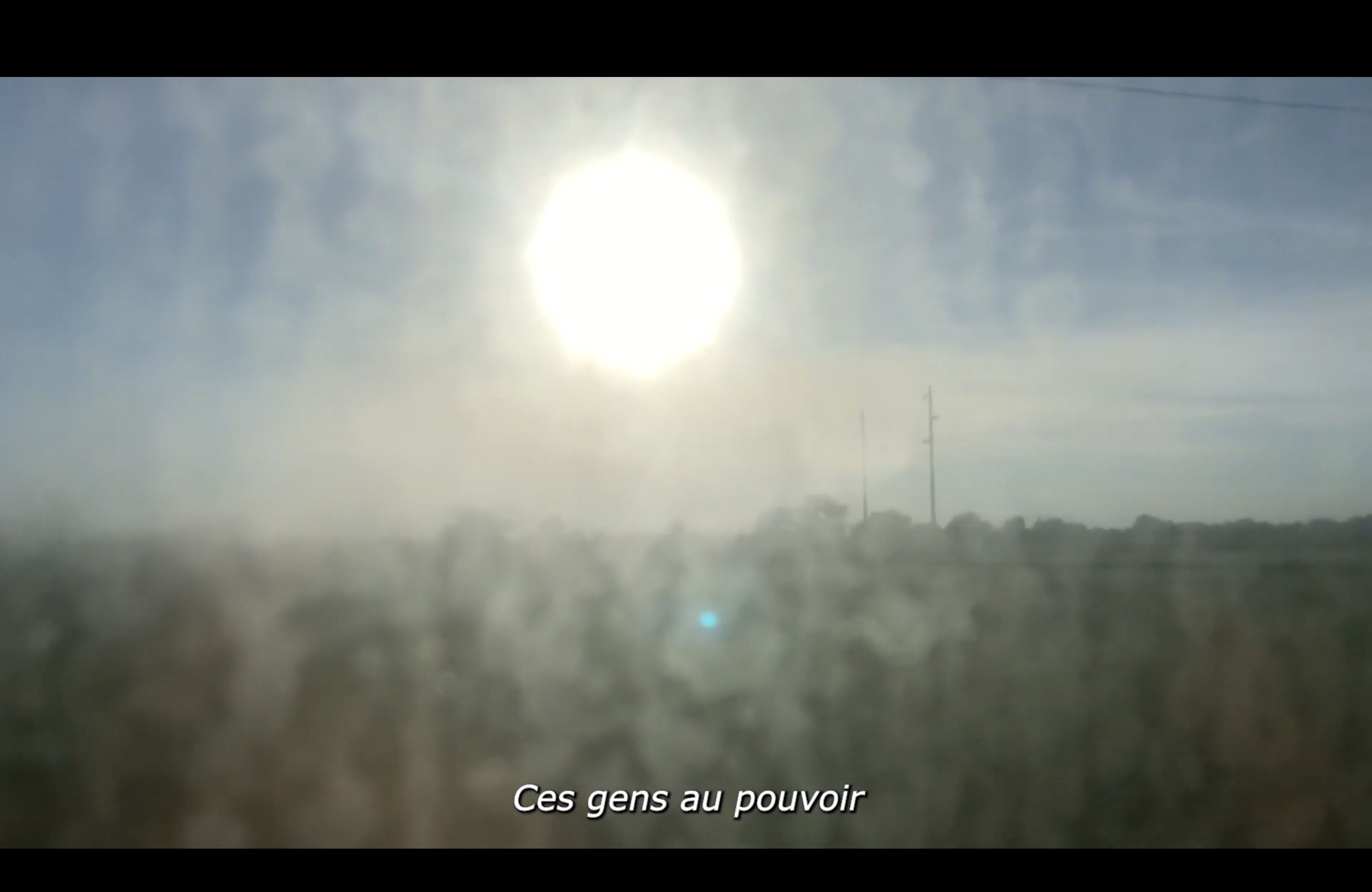
The Mediterranean horizon that I can see every day from my home in Beirut, that horizon that was already quite blurred, became even more obstructed as it was overtaken by what was happening southward, less than three hundred kilometers away. As the crow flies, as they say—I still have this memory of one of the countless videos that come to us from Gaza, yet another terrible bombardment, screams, people running, the damn drone overhead, and the panic of the birds. I could clearly hear the birds in the heart of the inferno...
On October 13, 2023, I learned that the dismembered body of my friend Saïd, of whom we had heard nothing, had been found in Gaza. He had left Sweden in early 2021, where he had lived for over two decades, unable to withstand being far from his family any longer. He had entered Rafah, never to leave again. We met in Lebanon, in a Fedayeen training camp. He left with other Palestinian fighters, evacuated in 1982, during the siege of Beirut. Saïd no longer held arms; he had none left. We were no longer of age, and he had decided to help in the paramedical field. His terrible death put yet another face on the carnage suffered by the Palestinians.
As you know, my connection with the liberation struggle of Palestinians goes back a long way. Not just as a sacred cause in our region since the advent of Zionism, and even more so since the creation of the Jewish State, but also, in the wake of May '68, the Viet Cong, the many and varied liberation struggles all over the world, with the aim of overthrowing our dictatorial, conservative, puppet regimes, of overthrowing the old world, as we used to say. The Fedayeen were our fighting vanguards, and it was with them, in their company among others, that I learned to question the established order, to challenge more than one lever of power, and to discover more than one revolutionary, subversive thought. And even if the repeated failures of overthrow and the advent, or resurrection, of forces that are conservative and reactionary, to say the least, in our country, as everywhere else, ended up eroding the momentum of liberation, of emancipation on so many levels, of the sixties and seventies, the absolute right to self-determination of the Palestinians nonetheless remains the cornerstone of the decolonization struggles in this bloody world, the almost-last decolonization. We are born more than once in this life, it seems to me, and I was certainly born with the Palestinian cause. It awakened me to the fight against oppression.
After two months of what turned out to be more than just another punitive aggression against besieged Gaza, on my way to southern Lebanon, I filmed the road leading to a friend's village four or five kilometers from the enemy's border. The violence we were experiencing was still very targeted, of “lesser intensity”. I understood then that Contretemps could not end in September 2023. It never ends...
This interview has been translated by Walid Sadek and edited for clarity.